You can't really deny that this film is a pretty pure example of masturbatory filmmaking. The filmmaker here has cobbled together all of these concepts of his in a way that seems very personal, and possibly somehow autobiographical. At the same time, the audience is constantly stroked, exactly like the audience in Woody Allen's Midnight in Paris for being hip to what he's doing here or there. It's also pretty easy to say it's like a David Lynch movie, but not as straightforward. For me, there were stretches of the film that I found tedious or insipid, but there were also segments that I found compelling or even beautiful.
Denis Lavant, who played the main character Merde in that annoying middle section of that omnibus film Tokyo! from 2008 or something, is back here playing the same character and about ten others. In the film, he is chauffeured around in a limosine, possibly with bodyguard protection, and taken to different "sessions" or appointments. The almost mystical chaufffeur is played by mesmerising Édith Scob, who is perhaps best known as the girl in Franju's Eyes Without a Face. Like many of the characters in the film, it's hard to know whether to think of them as benevolent or menacing. Perhaps, as in many dreams, the figures are meant maintain the suspense of that mystery. They make nine or so stops and at each stop, Lavant plays a different character: a gypsy beggarwoman, a green screen actor, that same stupid troll from that Tokyo!movie, an emotionally abusive father, a murderous gangbanger, etc.
Man is said to differ from other apes in his propensity to ask why. So watching all these episodes, which end in the chauffuer donning her Eyes Without a Face mask and leaving the cars to themselves, it's hard not to try to make connections. He's clearly working through something about the artist's role, probably about his own life as well, since the protagonist's name is the director's real middle name, and it ends with a photograph of his lost lover. Like any other story about artists, it's easy to see metaphysical themes in the piece. Maybe god is in all these people in all these acts. I don't know, maybe this guy is just self-absorbed and preoccupied with the grotesque. I can't tell if it's because I had lost patience by that point in the film, but I was really surprised by how absolutely bored I was during the entire Kylie Minogue scene. In constrast, I was pleasantly surprised by Eva Mendes in the film. She's in the session with the stupid troll, but for some reason the troll shtick just barely tips toward succeeding in this film while it pretty squarely hit with a thud in Tokyo! Weirdly, my biggest reaction to the film is that my new dream is to enter Paris by car some day. I think I've been to Paris three times, but all three times I entered by train. In fact, I don't think I've ever even taken a cab in Paris, but this film makes driving around Paris look incredibly beautiful, all the while eschewing a lot of the kitsch that that idea is probably conjuring in your mind. In fact, there are all kinds of gorgeous views of the city, particularly as they stand atop the historic Samaritaine department store, which is allegedly being converted into a hotel, according to the interwebs.
I imagine I will probably watch this movie again at some point in the future, but I can't think of many people I'd recommend it to. I'm honestly surprised by the critical reception it's received. It won the awards for best film, best director, and best actor at the Chicago International Film Festival. I wasn't surprised at all to find out at after seeing the film that the director's mother is a long time friend of the festival organizer. Maybe it was nepotism, my cynical side says. Of course, it's also true, as the French say, à chacun son goût. I don't know, I can see making love letters to the movies, but for me there needs to be more than that, and this film didn't really connect to me like it seems to connect to a lot of other people. Oh well.
C
It occurs to me while reading through these reviews that I really did love the film for about the first third and it gradually kind of wore on me. Like Roger Ebert apparently, it brought to my mind the Walt Whitman line, "I contain multititudes." I guess I'd also agree with Ebert that the film is exasperating and sometimes funny, though I didn't really sop it up as much as he did. It's amazing how all these reviews keep talking about how exciting and not boring this movie is, since I was more or less bored for much of the second half of the film. The sessions in the latter half become increasingly more dour and confounding, I thought. In reading these reviews though, it's surprising how many people, like myself, seem to have forgotten about one of the more enjoyable scenes in the film, the entr'acte, in which a band of hipster accordionistes rampages through an old church.
I've also discovered that the title refers to old film cameras and the movie, shot on digital for financial reasons, seems to be about the death of film in some ways, though the director says allegedly that this movie isn't about film at all. I feel as gypped as the next guy when it comes to seeing a movie in digital projection, but I don't know how thrilling a two hour lament on the subject is.
It's funny as I read through the reviews listed at mrqe.com, everyone seems to agree that this movie will elicit all these possible responses from the audience. It's a unique film, but it's not as unique as people say it is. It can be touching, it can funny, and it can be frustrating, but I really don't see why people react so strongly to it. There was one review somewhere that said that the film says most of what it has to say in the first few episodes. I'd agree with that. My own experience of the film is that it would have benefited from some trimming, since like I said before there were some significant dull patches in the second half of the film.
Showing posts with label chicago international film festival. Show all posts
10 November 2012
07 November 2012
Keep the Lights On (Ira Sachs, 2012, USA)
This more or less autobiographical drama is about a documentary filmmaker who takes a break from cheap flings long enough to have a years long frustrating relationship with a crack addict. In the lead role is Thure Lindhardt, whom I recognized from Danish films Flame & Citron and Brotherhood, both of which I probably liked better than this movie. Lindhardt plays Erik, the documentary filmmaker who spends a lot of time on those phone lines that existed before people starting hooking up through websites like gay.com and manhunt. Because much of the film takes place in the 90s, in Manhattan. It's one of those movies where you can always tell what year it is by what cell phone someone is using. Anyway, he hooks up with Paul (Zachary Booth) and gets smitten with him even though he's basically a closeted homosexual with a crack problem.
For me, the film was too cavalier about all the drugs. I guess it reminded me of my own life in the 90s, to some extent, but I feel like the weakness of this film is that the director seems too uncritical of the character based on himself. He's a sweet and likeable character, but I ultimately didn't find him believable. I almost felt by the end of the film that the director used it in such a way as to grant himself absolution for something.
I liked the film, I guess, but something about it seemed flat to me.
B-
For me, the film was too cavalier about all the drugs. I guess it reminded me of my own life in the 90s, to some extent, but I feel like the weakness of this film is that the director seems too uncritical of the character based on himself. He's a sweet and likeable character, but I ultimately didn't find him believable. I almost felt by the end of the film that the director used it in such a way as to grant himself absolution for something.
I liked the film, I guess, but something about it seemed flat to me.
B-
Labels:
2012,
B,
based on real life,
chicago international film festival,
lgbt
29 October 2012
The Scapegoat (Charles Sturridge, 2012, UK)
If you were ever a big fan of Bette Davis or Alec Guinness, you've probably seen the 1959 version of this story, adapted from a Daphne Dumaurier novel. My impression from my vague memory and from what little I've read is that this version is fairly different from the older version, and, from what I've read, this is supposedly more faithful to the source material.
It's 1952, and boarding school teacher John (Matthew Rhys) has just been relieved of his position, due apparently to budget cuts. He decides he's going to travel around the world, but before he even gets to the train station he runs into a man who looks exactly like him, playboy Johnny. Johnny oversees his family's estate and their glass foundry and like many titled families in this era it all seems about to come crashing down. How alike can they possibly look, you might ask... Well, they're both played by the same actor. Johnny contrives for them to switch places so he can disappear for a while, and in a string of scenes that is more trying to the patience than anything else, John is for various reasons compelled to play along, usually because the people around him are acting like no person would ever act. Anyway, once he commits to playing the part, the movie picks up a little steam. There is this interesting theme about atoning for another man's sins, but in general the film plays like a glossy made for tv film, which is what it is.
All of this occurs on the eve of Queen Elizabeth's coronation, which seems to hover at the background throughout the movie until they finally watch the coronation occur on the newfangled television machine. I'm not keyed in enough on recent UK history to understand the significance of this, but it's interesting that Johnny's daughter's deceased goldfish is named Mrs. Simpson. Interesting, but again I'm not really sure what the significance is. One thing that bothered me about this film is that the values embedded in the film struck me as somewhat anachronistic. It's very clearly leaning toward more contemporary attitudes, which makes sense, but I found it distracting. I also worry it's the sort of thing that leads to nostalgia for a kind of brutal classism that doesn't deserve to be nostalgized. But of course I grew up in America in a pocket of Wisconsin that still retained the progressive values that put the state on the political map, so I may see the film differently than other viewers. All in all, it's an engaging made for tv film with an engaging cast, and it does pretty well, aside from a big chunk in the first third which I actually kind of found hard to watch.
C+
Afterword: Now that I think of it, I suppose you have this theme about the social changes in England, possibly an increased democratization and a transition into the contemporary era. The queen replaces the king, television takes hold, and a working class person literally replaces the son of a Lady. I'm still not sure how Mrs. Simpson fits in, other than seeing her symbolic passing as another symbol of the death of a bygone era.
It's 1952, and boarding school teacher John (Matthew Rhys) has just been relieved of his position, due apparently to budget cuts. He decides he's going to travel around the world, but before he even gets to the train station he runs into a man who looks exactly like him, playboy Johnny. Johnny oversees his family's estate and their glass foundry and like many titled families in this era it all seems about to come crashing down. How alike can they possibly look, you might ask... Well, they're both played by the same actor. Johnny contrives for them to switch places so he can disappear for a while, and in a string of scenes that is more trying to the patience than anything else, John is for various reasons compelled to play along, usually because the people around him are acting like no person would ever act. Anyway, once he commits to playing the part, the movie picks up a little steam. There is this interesting theme about atoning for another man's sins, but in general the film plays like a glossy made for tv film, which is what it is.
All of this occurs on the eve of Queen Elizabeth's coronation, which seems to hover at the background throughout the movie until they finally watch the coronation occur on the newfangled television machine. I'm not keyed in enough on recent UK history to understand the significance of this, but it's interesting that Johnny's daughter's deceased goldfish is named Mrs. Simpson. Interesting, but again I'm not really sure what the significance is. One thing that bothered me about this film is that the values embedded in the film struck me as somewhat anachronistic. It's very clearly leaning toward more contemporary attitudes, which makes sense, but I found it distracting. I also worry it's the sort of thing that leads to nostalgia for a kind of brutal classism that doesn't deserve to be nostalgized. But of course I grew up in America in a pocket of Wisconsin that still retained the progressive values that put the state on the political map, so I may see the film differently than other viewers. All in all, it's an engaging made for tv film with an engaging cast, and it does pretty well, aside from a big chunk in the first third which I actually kind of found hard to watch.
C+
Afterword: Now that I think of it, I suppose you have this theme about the social changes in England, possibly an increased democratization and a transition into the contemporary era. The queen replaces the king, television takes hold, and a working class person literally replaces the son of a Lady. I'm still not sure how Mrs. Simpson fits in, other than seeing her symbolic passing as another symbol of the death of a bygone era.
27 October 2012
A Royal Affair / En kongelig affære (Nikolaj Arcel, 2012, Denmark)
This film seems to have done well in Denmark and it seems poised to do well enough in America. I got the impression that it was going to get released here early in the spring. I got a sticker for checking in to this movie on my GetGlue app, which tells me that someone is actually pushing this movie. It's based on a true story, alledgedly one of the great stories of Danish history, according to the director, who also wrote the screenplay for the Swedish version of The Girl with the Dragon Tattoo.
This film deals with the end of the Danish feudal system and the ultimate rise of the Enlightenment in Denmark. It seems that feudalism lasted longer in Denmark than in the rest of Europe. Mikkel Boe Følsgaard stars as the mad king Christian VII and Alicia Vikander stars as his wife, Queen Caroline. Both actors are relatively new here but give performances good enough that they're considered breakout performances. I particularly like Vikander as the queen. Mads Mikkelsen seems to be the number one actor in Denmark for the past several years. If you're like me, you've probably seen him in After the Wedding and Flame and Citron. If you aren't like me, you've probably seen him in Clash of the Titans and Casino Royale. In any event, he's at the center of the film as the Enlightenment oriented doctor beloved by both the king and queen, who have pretty much been estranged since they first met. In these days when the oligarchy is threatening centuries of progress, this film actually seems pretty relevant. I think we have this illusion that the forces in our world which enjoy wealth and power could somehow be checked for the greater good if the need and the will arose. This film argues that, at least in the short term, it's best not to underestimate them that has.
B
This film deals with the end of the Danish feudal system and the ultimate rise of the Enlightenment in Denmark. It seems that feudalism lasted longer in Denmark than in the rest of Europe. Mikkel Boe Følsgaard stars as the mad king Christian VII and Alicia Vikander stars as his wife, Queen Caroline. Both actors are relatively new here but give performances good enough that they're considered breakout performances. I particularly like Vikander as the queen. Mads Mikkelsen seems to be the number one actor in Denmark for the past several years. If you're like me, you've probably seen him in After the Wedding and Flame and Citron. If you aren't like me, you've probably seen him in Clash of the Titans and Casino Royale. In any event, he's at the center of the film as the Enlightenment oriented doctor beloved by both the king and queen, who have pretty much been estranged since they first met. In these days when the oligarchy is threatening centuries of progress, this film actually seems pretty relevant. I think we have this illusion that the forces in our world which enjoy wealth and power could somehow be checked for the greater good if the need and the will arose. This film argues that, at least in the short term, it's best not to underestimate them that has.
B
Sister / L'enfant d'en haut (Ursula Meier, 2012, Switzerland)
This film somehow feels a lot like Meier's last film, Home. The main character here is 12 year old Simon, who seems to support himself and, to some extent his sister, by stealing from tourists at the nearby ski resort. Much of the film is him going up to the top of the mountain and stealing skis and so forth. He's staying with his sister, and things seem off, and they are. A lot of the films I saw at the film festival seem to consider those people in the society whom the larger society fails. It was kind of hard for me to watch, though I'm not sure everyone would feel the same way. Anyway, it's Switzerland's submission for the 85th Academy Awards.
B
Shun Li and the Poet / Io sono Li (Andrea Segre, 2012, Italy)
Tao Zhao, as lovely and graceful as in Still Life (2006), stars as a woman who has come from China to Italy. At the start of the film she is working off the debt she incurred in coming to Italy at a garment factory, awaiting the day she's repaid her debt so her son can come. She is transferred to a bar near the port of a city on the mainland near Venice. At the bar, she meets a kindly old man whom his friends call the Poet because he's always making these silly rhymes. Shun Li and the Poet become friends and it's sweet until everyone in the area starts clucking about how she's a scheming Chinese lady and all this stuff. It's really lovely how the film shows us how these two sad, lonely people find comfort and joy together, until society intercedes and reminds them that the social contract requires them to remain unhappy. It's not as dour as all that, though it can be quite sad. Anyway, I thought the film was just as graceful and lovely as the lead actress.
A
A
Labels:
2012,
A,
chicago international film festival,
Italy
Shadow Dancer (James Marsh, 2012, Ireland)
Tom Bradby has adapted this screenplay from his own novel. Honestly, my reaction to this movie is that the only excuse for how things went is if it was based on a true story, which it doesn't seem to have been. In the prologue, we see that the McVeigh family has personal reasons for fighting the English in Northern Ireland. Their son was shot outside their home. Colette, played as an adult by Andrea Riseborough (the best thing about the movie), is also implicated in this event because she was told to get cigarettes for her dad, but she bribed her little brother to go instead. So we fastforward some number of years to the mid 1990s. Colette is an adult who gets picked up following a botched terror attack in London. Clive Owen puts the squeeze on her to become an undercover agent, but the plot is thicker than it first appears. Honestly, I don't find that the final twist of this film holds up to much scrutiny. Or maybe it's saying something pretty harsh about officials. Anyway, the film is mostly the suspense you see in the trailer. What will be the ramifications for Colette and her family? Will her info lead to the deaths or arrests of her friends and family? Will they find out and kill her? It's an interesting enough movie in the abstract, but mostly it didn't feel like it had enough heft and it certainly didn't seem to me to earn its ending. That said, the middle aged ladies I kept encountering at all the screenings seemed to like the movie quite a bit more than I did.
C
C
Labels:
2012,
based on a book,
C,
chicago international film festival,
Ireland
The Exam / A vizsga (Péter Bergendy, 2011, Hungary)
Most discussions of this movie seem content to dismiss it as a lesser The Lives of Others. This dismissal says more about the rigid thinking, mental laziness, and weak education of people writing about film than anything else. I mean, both films are about Eastern Bloc countries surveilling their citizens, but the similarities really end there. The film begins by telling us that at some point the government has passed a law requiring all intelligence personnel to be tested for loyalty. In a conflict of interest that seems too strange for none of the investigators to take note of, a middle aged investigator, Markó, oversees the test of a young agent, András, who was his protege and who is meant to dine with him and his wife that night. Because it's Christmas Eve. 1957. András's cover is that he gives English lessons from his apartment, but really people just come and rat out all their friends and associates. As the test is about to end satisfactorily a woman shows up at the apartment and everything is suddenly different from what it seems. Some of these plot twists you can see a mile away, and some are more surprising. Some of the actions taken by the characters seem logical and motivated and others seem borderline insane. In any event, the film is engaging and well put together. The cast is both attractive and capable. The film won first prize in the New Directors competition at the Chicago International Film Festival, and of the films from that slate that I saw, I imagine that it probably deserved it.
B+
B+
Labels:
2012,
B,
chicago international film festival,
Hungary
Everybody's Got Somebody...Not Me / Todo el mundo tiene a alguien menos yo (Raul Fuentes, 2012, Mexico)
Alejandra is a lesbian living in a large city I assumed to be Mexico City, but honestly I have no idea. She's probably in her late 20s and she seems to be drawn to 18 year olds she can lecture to and emotionally abuse. The director says the film is in black and white because Alejandra and her main love interest, the fair Maria, are polar opposites. Anyway, the film looks good. Whatever his intentions may have been, for me the most affective theme in the movie is the effect of this arrogant negativity that seems to prevail among us. That resonated with me because I've seen that self defeating behavior derail plenty of promising relationships.
B
B
Labels:
2012,
B,
chicago international film festival,
lgbt,
Mexico
Yuma (Piotr Mularuk, 2012, Poland/Czech Republic)
It's kind of a sexy film, I guess. Jakub Gierszal, who plays the protagonist Zyga, is a pretty faced actor who kind of drips a sort of sexual energy. Actually, almost everybody in the film does. The story starts toward the end of the 1980's, I imagine. Zyga and his best friend help this East German escapee get to the West German embassy. He gives them money that Zyga first tries to decline, but they end up accepting it, which leads them to a prostitute in the forest, which leads to hijinks, which leads to a traumatic experience which sets the film in motion, more or less. The friend disappears and comes back later on in the film as a deranged lawman. Basically it's about these kids who succumb to the madness for materialism that sweeps through the former Eastern Bloc after the Iron Curtain falls. We're informed at the beginning of the film that the area of Western Poland that borders Germany is called Juma (pronounced Yuma) and because stolen German goods are so widespread in that part of Poland, the word Juma has come to mean something about reselling stolen goods. So this is what Zyga gets mixed up with, naturally. Alongside all the massive trucks operated by the Russian mafia, Zyga starts smuggling stolen goods across the border, first Marlboro cigarettes at the behest of his brothel running aunt, and eventually anything you could think of. Things naturally go well for a while as Zyga and his friends run around town in their stylish threads blasting their stylish music and so forth and naturally things get out of hand. The protagonist is inspired by the old western 3:10 to Yuma. I haven't seen that film in a few years but I don't remember the plot being too similar to what happens here. Anyway, it's sort of an exciting movie, but sometimes the characters are weirdly mean given how likable they can be and how fluffy the film can be. In the end, it's an entertaining film, but not one you can always take seriously.
C
C
Labels:
2012,
C,
chicago international film festival,
Czech Republic,
Poland
Dreams for Sale / Yume uru futar (Miwa Nishikawa, 2012, Japan)
A husband (Teruyuki Kagawa) and wife (the exquisite Takako Matsu) have this little restaurant that burns down during the dinner rush one night. The fire insurance doesn't go very far and they're desperate. The wife seems more okay with things, seeming relatively content to work a job at a cheap restaurant while they're working on getting a new restaurant. The husband's self pity basically turns him into a scoundrel. At one point he sleeps with some old acquaintance of theirs who gives him a bunch of money she doesn't want. The wife puts two and two together and comes up a plan that she dedicates herself to, seemingly to both make her husband's dream restaurant a reality and also to make him atone for what he's done with this other woman. This plan is to convince all these women that he's going to marry them and to weasel money out of them that they will eventually pay back with interest. As is often the case, the driving force in these schemes is pretty much the male ego, but as is also often the case, the woman ends up getting stuck with the blame. More or less. The film has an interesting premise and a lot of interesting characters. I just didn't really buy into a lot of the film's logic. Perhaps something was lost in translation, I have no idea.
C
C
Labels:
2012,
C,
chicago international film festival,
Japan
Our Children / À perdre la raison (Joachim LaFosse, 2012, Belgium)
Belgium's submission to the Academy Awards foreign film competition, this film is apparently based on a true story. Perhaps if I had known that going in, it would informed my viewing in such a way that I didn't find the film such a downer. It kind of uses the Lars Von Trier template where you start out with this great woman, and this case a very likable new husband, and drag her through endless unpleasantness until something dramatic happens. The film starts with the woman ( Émilie Dequenne) in an emergency room telling the nurses that her children needed to be buried in Morocco. We then see some small coffins being transported and then we start at the beginning of their friendship. She's a school teacher dating this resident at a hospital or something, played by the guy from A Prophet (Tahar Rahim). The old guy plays his friend/mentor is the old guy from A Prophet (Niels Arestrup). For financial reasons the couple move in with the older friend, who turns out to be married to the guy's sister, and the wife starts banging out kids while the audience is left wondering what kind of strange relationship is going on with the two men. The husband gradually becomes less and less sympathetic, but the movie still seems to expect us to sympathize with him and his desperate family. I just read a review that called the film emotionally draining and that's exactly how I would describe it. Maybe it's because I'm not particularly interested in all this breeding stuff, but I didn't find anything particularly appealing about the film as a whole, though I like most of the actors well enough.
C
Color of Sky (Dr. Biju, 2012, India)
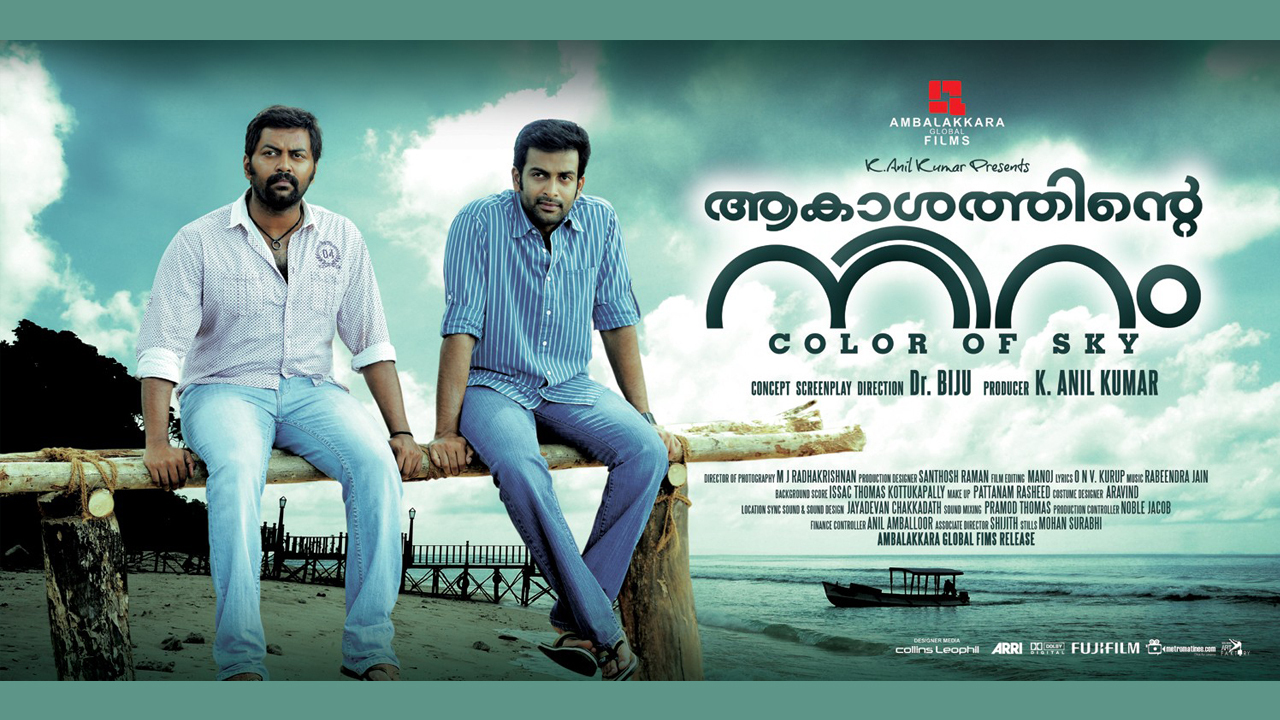
An old man comes to town to sell some art objects and pick up some flour or something. A thief sees him get the money at the art place and follows him back to his boat and eventually tries to rob him on the boat at knifepoint. The clever old man thwarts the robbery and ferries the thief to his isolated island where the thief is held prisoner, more or less, though he is treated like a hotel guest or something. Also at the hotel type place are a man, a woman, and a child, all of whom are mostly silent in the film. I liked the message of the movie, which is essentially that you need to find beauty in your life and that creating art and helping other people are both redemptive activities. I'd be surprised if this movie ever materialized anywhere, but I enjoyed it quite a bit, even if it was sort of meditative and intermittently perplexing.
B
B
Labels:
2012,
B,
chicago international film festival,
India
26 October 2012
Valley of Saints (Musa Syeed, 2012, India)
Valley of Saints takes place primarily on and around Dal Lake in Kashmir. At the start of the film, rebel actions lead to a city wide curfew which exempts the boat people who live on these little islands in the lake or in houses on stilts in the lake. Two boys have been planning to leave the city to try their fortunes in Delhi. Afzal is a typical macho type male, committed to various smuggling schemes and so forth, while Gulzar seems to possess a more sensitive and artistic temperament. Naturally Gulzar becomes out protagonist. The friends' attempt to leave the city is thwarted by the curfew and their relationship is strained as they booth swoon over this girl they are told to look after who is staying on Gulzar's uncle's (?) houseboat, which seems almost like a guesthouse built on stilts in the lake. The girl, Asifa, turns out to be a researcher studying the condition of the lake. It's great because there are the stories of these characters wrapped up both in the story of the political situation of Kashmir which looms in the background alongside the ecological crisis occuring witht his lake. I thought it was well done and compelling, overall.
B
B
Labels:
2012,
B,
chicago international film festival,
India
25 October 2012
Black's Game / Svartur á leik (Óskar Thór Axelsson, 2012, Iceland)
Pretty much everybody I met at the festival liked this movie. Ever the contrarian, perhaps, I wasn't quite as impressed. I thought it was a tacky, violent movie that glorified violence, nihilism, substance abuse, and cheap sexuality. The main character Stebbi is a miscreant who has just stumbled out of a jail where he's been booked for fucking some kid up when he was drunk. He runs into an old acquaintance from his hometown, Toti, all muscles and Satanic tattoos. Eventually, Stebbi does a dangerous job for Toti so this gangland lawyer will get him off of this heavy assault charge. Things go wrong during the job and Stebbi proves himself by going psycho on some important gangster or something. This earns him the nickname Psycho. Things go okay for a minute and then go out of control when this Satanic black metal looking criminal mastermind shows up and pushes it to the fucking limit. I didn't really buy all the plot elements, particularly a string of things toward the end of the film. It's also hard to care too much about these people because they're all evil, even though Stebbi is kind of attractive.
C
C
Westerland (Tim Staffel, 2012, Germany)
Based on what I just read on some German site, this film is apparently all about delivering the unexpected, or something. It takes places on Sylt, an island to the north of Germany which is associated with summer vacations. This film takes place here in the winter. It's also ostensibly a gay love story, but there is very little indication that this is actually a romantic relationship instead of a some kind of codependent friendship. They sleep in the same bed and spend a lot of time together but I don't recall them ever kissing or being otherwise physically romantic. I didn't know what to make of the film. The characters and their situations struck me as very authentic, but I don't know how interested I was in the story or how revelatory it felt. The characters are Cem and Jesus. The former is an industrious fellow who seems to let his own life affairs and possible future prospects drift into an abyss because of this strange codependent relationship. Jesus is unstable, possibly homeless, probably a pathological liar, constantly smoking pot, probably bipolar or something. These characters felt more or less real to me, maybe a little sanitized, and I enjoyed spending time with them, but I'm not sure the film had anything interesting to say about them. The crazy one is very pretty though.
B-
B-
Labels:
2012,
B,
chicago international film festival,
Germany,
lgbt
The Last Friday / Al Juma Al Akheira (Yahya Alabdallah, 2011, Jordan)
This was a dour, somewhat depressing movie. A cab driver, likable enough, but deep in hock following a failed attempt to make it big by going abroad, deals with cancer (or some testicular problem) of some sort and a juvenile delinquent son. He's also got all kinds of issues about his wife being married to a wealthy man, we discover. He also doesn't seem interested in telling anyone that he has this serious health condition. I don't know, most of the characters are likable enought but the film, like the city it takes place in, is stark and somehow painful to watch. This movie and I may have been doomed from the start because men annoy me so much, but for whatever reason, I had trouble really connecting to this one. The acting is good; Ali Suliman deserves the praise he's gotten for a good performance. The film is probably really real. People are probably too cold and unhelpful and self-defeating. It's probably just hard for me to watch sometimes, because it reminds me that I might not like people too much. It's funny though that people in this movie seemed so fond of dogs because we're all the time hearing that Arabs don't like dogs. It's funny how little we know about each other.
B-
B-
Labels:
2011,
2012,
B,
chicago international film festival,
Jordan
Postcards from the Zoo / Kebun binatang (Edwin, 2012, Indonesia)
A little girl loses her father in the zoo and apparently ends up staying and living there. That's the first few minutes of the movie. The rest of the movie takes place as she is an adult of indeterminate age, perhaps 20? I really wasn't sure. She wanders around the zoo, dreams of petting the giraffe's belly, and falls in love with a strange, silent cowboy magician. I liked this movie, in some ways, but mostly I was just kind of bored. That might be the pitfall of seeing five movies in one day at a film festival. I'm not sure. I can imagine myself liking this movie, but I didn't really engage with it at all when I saw it.
C
C
Labels:
2012,
C,
chicago international film festival,
Indonesia
Coming of Age / Anfang 80 (Gerhard Ertl & Sabine Hiebler, 2011, Austria)
This was supposed to be my light palate cleanser of the festival, and being a film festival, this pretty much was, is the funny thing about that. Right before it started the lady next to me said something about it being sad or something, and I was like, what? I guess what I failed to glean from a trailer or anything before seeing this movie are two key facts of the film that are presented upfront in the film, but not so much in the trailer, as I recall. First, the man in the story is already married to another woman. Secondly, the woman has cancer. That said, it's still a pleasure to watch. It's half comedy, half tearjerker, and more or less 100% crowdpleaser. The cast is great, it's beautifully filmed, and the story hits in all the right places. Anyway, I ate it right up.
A-
On a bit of a side note, the lady from Paradise: Love appears in a supporting role in this film. It's not a huge role, but it was a fun surprise, having just seen Paradise: Love a few days prior to seeing this.
A-
On a bit of a side note, the lady from Paradise: Love appears in a supporting role in this film. It's not a huge role, but it was a fun surprise, having just seen Paradise: Love a few days prior to seeing this.
Labels:
2011,
2012,
A,
Austria,
chicago international film festival
Post tenebras lux (Carlos Reygadas, 2012, Mexico)
The film's title is Latin for "After darkness, light." That's about as much clarification as you're going to get here. The first few minutes set me up to think that this would be an amazing film. There is this demented high energy sequence where this little girl is standing in a rainy field calling the names of herd animals which seem to be stampeding about her. The sky is a poisonous garden. The actual title sequence is annoying as each of the three words is placed on the the screen individually for too long a time. Honestly, it kind of undercut the energy of the previous scene by seeming silly and self-important. This is followed by a scene of a cartoon devil walking into an apartment with a toolbox. Very unexpected. Then are all these random scenes of rugby, sex clubs, animal cruelty, an AA meeting, family bonding, and strange weather. I liked a lot of this movie. Some of the sequences are electrifying. I'm just not sure the film earned its high moments, and the sum of the parts seem more than the whole. By the way, several people left the screening early on when the ostensible protagonist seems to beat a dog to death. Still more trickled out during an inexplicable sequence in a sex club which went from perplexing to tedious to enchanting. The latter scene has a lot of nudity but nothing too graphic and the dog scene is disturbing but it's filmed in such a way that the dog is mostly offscreen while it's taking place.
Essentially, I kind of feel like the cinematographer Alexis Zabe is the real star here, as perhaps was also the case in Silent Light. The little girl in the movie is also exquisite; I was surprised to learn that she's the director's own daughter.
I guess I'm not giving the full picture here. I may have read too many other reviews. The movie seems to be about dreams, maybe life being a dream, maybe childhood being a dream, and a wistful longing for the experience of being a child. At least that seems to be part of it.
B
Essentially, I kind of feel like the cinematographer Alexis Zabe is the real star here, as perhaps was also the case in Silent Light. The little girl in the movie is also exquisite; I was surprised to learn that she's the director's own daughter.
I guess I'm not giving the full picture here. I may have read too many other reviews. The movie seems to be about dreams, maybe life being a dream, maybe childhood being a dream, and a wistful longing for the experience of being a child. At least that seems to be part of it.
B
Labels:
2012,
B,
chicago international film festival,
Mexico
Subscribe to:
Posts (Atom)