Showing posts with label B. Show all posts

14 November 2012

End of Watch (David Ayer, 2012)

There are a number of reasons I'm not generally a fan of cop dramas. My stepfather was a cop, I'm generally resistant to authority, I find them strong on machismo and weak on sociology. They tend to feel sad and tense and generally oppressive. More generally, they tend to overly simplistic, reactionary, and borderline fascistic. This film is a typical buddy cop drama in a lot of ways, but it sidesteps a lot of the frequent weaknesses. The characters are more developed and the dialogue is stronger, for starters. The approach is more naturalistic, even though some of the subject matter is really kind of sensationalistic. Given the news reports about the Mexican drug cartels, it doesn't seem like anything here is particularly implausible though.
The focus of the story is the relationship between two beat cops who work in South Central LA. Played by Jake Gyllenhaal and Michael Peña , they seem relatively authentic. Gyllenhaal is the war vet taking courses so he can go to law school. This higher education justifies the film's strangely half executed found footage conceit. He's recording everything for a documentary class he's taking to satisfy an arts requirement. The found footage conceit in the original script was apparently scaled back during preproduction, and some viewers seem to find its vestigial presence more confusing or frustrating than anything else. Personally, I didn't get too invested in the conceit. While watching it, I assumed that the video would somehow come into play as evidence, a turn of events that is foreshadowed by another cop's remark about the dangers of filming their work because it could be subpoenaed. Ultimately that ended up as something of a red herring, but I still found that that constant thread of the filming somehow made the characters seem more human. It was just this running bit that gave a sense of continuity. Peña's character is sort of a romantic and the head of a young family. There is a certain sweetness in the way that Gyllenhaal seems to follow Peña's path with his best girl Anna Kendrick, whose milquetoast quality works oddly well here.
I made a mistake partway through the film of looking at the film's Wikipedia page because I wanted more information about the director and supporting cast. It turns out there's a spoiler embedded in the title. It seems like it might not be much of a spoiler if you've seen the trailer, which I haven't, but as someone who knew nothing, it alerted me that the film was going in a somewhat different direction than I was anticipating. After that, it became pretty clear how the film would end. I thought it would surprise me for a while, but then it didn't. So sad. Oh well. As a whole, I found the cast relatively strong and the characters relatively sympathetic, which is probably something of a feat in a film like this.
When I was thinking about this movie it reminded me of my thoughts during the film festival. How do you give an objective assessment of a film? I have my own ways of assessing films, usually based on how much they stir me in the gut or in my head, but sometimes the rubrics people use in assessing film don't seem to make sense. This isn't really my genre. It's sort of predictable, the characters may be a little sanitized, it's kind of dour sometimes. Still, considering the genre it really excels. It made me appreciate what cops do in a way that few films have inspired. I grew very fond of many of the characters, even a couple of the thugs in the neighborhood. There are these great ironic moments, like the one where the dynamic duo is arguing about a rubber band while gangland assassins are in the car behind them discussing whether or not they will attempt to kill them at the stop sign they're approaching. I don't know that I'd watch it again, but it impressed me in what it did well. I don't know that everyone would like it, but I'd probably recommend it to most people, as long as they don't mind movies that are kind of serious. It's strange to me that this film was written, directed, and produced by the writer of The Fast and the Furious.
B

13 November 2012

Skyfall (Sam Mendes, 2012, UK)

A few years ago I had only seen a few of the Pierce Brosnan James Bond films and Dr. No. At the time I had a job where not much happened, but I could basically watch TV all morning, and Spike had a Month of Bond thing where they played almost all of the Bond movies in chronological order. Honestly, I'm not that huge a fan of the series. I liked some aspects of some of the installments and I liked some films better than others. I probably liked Sean Connery the least and possibly Pierce Brosnan the best, but I'm not sure. Anyway, I say all this to put in context my assertion that I think that Skyfall is probably the best James Bond movie I've ever seen. It has a lot of the weaknesses that characterize the previous films, and it leans heavily on the template that pretty much every James Bond movie is structured by. As usual there are two love interests here, but the interesting one (aka, the bad one for whom things don't work out too well) is probably among the most mesmerizing Bond girls in history. Honestly, I'm having trouble writing about this movie because in order to discuss how it fits in with the tropes of the series there are all kinds of spoilers that come into the equation. I guess what's interesting is that this movie fulfills most of the expectations you'd have for a Bond film, but it does so in ways that are sometimes inventive or even challenging to the canonical representations, particularly the role of Moneypenny, who appears very late in the film.

My boyfriend, like some of the reviewers I've read, complained that many of the action sequences seem weirdly slow or non-thrilling. I agreed, but I felt like it fit into the larger agenda of the film, all character development and ruminations on what it means for him and M to still be at this. Much of the acting is pretty good, particularly by Bérénice Marlohe (the bad girl, pictured above) and Judi Dench (as usual, M). Daniel Craig, Ben Whishaw (Q for Quartermaster), and Naomie Harris (Eve) are pretty strong as well, though Whishaw and Harris have weaker moments to offset their stronger moments. Javier Bardem is generally strong in his performance, though it sometimes (as is probably appropriate for a James Bond film) borders on cartoonish. The one off note for me was Ralph Fiennes. In fact, his first scene is a conversation with Judi Dench, which really becomes an object lesson in why she's considered such a great actress. Compared to him, she's so present in her role, so in command of what she's doing. There are a few criticisms you could make, particularly about the tightness of some of the action sequences, but except for one thing, which takes up less than thirty seconds of screen time but still manages to almost sink the entire film, I wasn't particularly bothered. But then, there's that thing that happens. I'd heard people talking about how absurd it is what the characters do in a pivotal moment of the film, acting stupider than anyone ever would for no particular reason at all, and as the movie progressed I had started to wonder if I was somehow missing what those actions were. Let me tell you, if you go see the movie, you will know it when you see it. It's like something from Scooby-Doo or one of those stupid spoof comedies like Scary Movie. I really couldn't believe it. The shock of it has dissipated and I'm not bothered by it as much as when I was watching the movie, but last night in the theater, I felt like my mind was blown by the inexplicably stupid direction the film seemed to be taking. Oh well.
B
For what it's worth, I also quite liked the Adele song and think it fit in with the movie better than they sometimes do, and the opening montage was also generally well executed.

10 November 2012

Surviving Progress (Mathieu Roy, 2011, Canada)

Apparently based on the book A Short History of Progress by Ronald Wright, this documentary looks largely at the inherent dark side of progress. If you're a thinking person, you've probably thought about most of this stuff already, but I did learn one interesting concept from the film: the progress trap. Essentially, progress has a tendency to lead to a saturation point past which dire consequences occur.  A primitive example is native people driving herds of mammoths over cliffs and driving the extinction of their main food source. The film features people such as Margaret Atwood and Jane Goodall talking about primates and progress and the ecological dangers facing us today. It's interesting, but I often found it difficult to pay attention to because it's so distressing. I think I will probably endeavor to read the book, and I may watch the film again when I'm feeling more emotionally robust.
B

Now streaming on Netflix, btw.

07 November 2012

Keep the Lights On (Ira Sachs, 2012, USA)

This more or less autobiographical drama is about a documentary filmmaker who takes a break from cheap flings long enough to have a years long frustrating relationship with a crack addict. In the lead role is Thure Lindhardt, whom I recognized from Danish films Flame & Citron and Brotherhood, both of which I probably liked better than this movie. Lindhardt plays Erik, the documentary filmmaker who spends a lot of time on those phone lines that existed before people starting hooking up through websites like gay.com and manhunt. Because much of the film takes place in the 90s, in Manhattan. It's one of those movies where you can always tell what year it is by what cell phone someone is using. Anyway, he hooks up with Paul (Zachary Booth) and gets smitten with him even though he's basically a closeted homosexual with a crack problem.

For me, the film was too cavalier about all the drugs. I guess it reminded me of my own life in the 90s, to some extent, but I feel like the weakness of this film is that the director seems too uncritical of the character based on himself. He's a sweet and likeable character, but I ultimately didn't find him believable. I almost felt by the end of the film that the director used it in such a way as to grant himself absolution for something.

I liked the film, I guess, but something about it seemed flat to me.
B-

03 November 2012

The Queen of Versailles (Lauren Greenfield, 2012, USA)

This film, which is recently out on DVD, is described as a documentary surrounding the construction of the largest home in America. Or something. Anyway, I feel like my experience of the film was colored strongly by two extraneous factors. One is the fact that the businessman, David Siegel, at the center of the film is the guy who made news recently for threatening his Vegas employees that they ought to vote for Mitt Romney if they wanted their jobs. The other is a piece I read recently in the New York Times, which discussed the subsequent lawsuit surrounding this movie, which is about as interesting a story as anything in the film. Other than giving some more insight into Mr. Siegel's perspective, the piece also left me with reservations about the filmmaker's approach. There are scenes in the film which are misleading, and some that are out of order. There are scenes in the film which were more or less choreographed by the filmmaker. I know this is very common practice among documentarians, but it makes me a little uneasy all the same.

Mr. Siegel is the very wealthy man behind the Westgate time share operations in Orlando and Las Vegas. His (third?) wife is a former Mrs. Florida and mother of 7+1 who kind of presides over the madness of the household with a kooky authority. The movie starts out fairly promising, if disingenuously so. The Siegels have begun building what is meant to be the largest home in America, inspired by Versailles. The time share business is more or less devastated by the financial crisis in 2008, and Mr. Siegel, who never set much aside, is suddenly in trouble. I felt pretty ambivalent about all the characters in the film, but the film certainly has something to say about a lot of facets of America, from just about any social, cultural, or economic angle you could think of.

I don't know, something in me rejected the film. Perhaps it's meant to leave you uneasy. From a distance, these aren't supposed to be very likable people, but they are actually likable to a point. And really, despite their extreme wealth and seeming detachment from reality, I'm not sure I've ever seen such authentically American people on film before. They really seem like anyone you've ever met who lives in the suburbs. Affable, delusional, entitled, and living beyond their means to some extent. And then you have the wife who is something like Norma Desmond or Little Edie mixed with your average billionaire soccer mom. Like I said though, I feel ambivalent about it. I'll probably watch it again some time.
B-

27 October 2012

The Master (Paul Thomas Anderson, 2012, USA)

I love PT Anderson films, cults, movies about cults, and Amy Adams, more or less. I don't like Joaquin Phoenix and Philip Seymour Hoffman annoys me a lot of the time. I've seen this movie twice now. The first time I loved it, and the second time I found it kind of sterile. I think the first time I was so mesmerized by the audacity of it. It really cuts to the quick of that era in America and I was surprised by how transparently about Scientology it was. My boyfriend said Lancaster and Freddie were drawn to each other because they each lived the life the other coveted.

Anyway, Freddie Quell is a WW2 veteran who arrives home completely off his rocker. What discussions of this film don't seem to take into account often enough is that he was likely bonkers before he ever set sail for the South Pacific. He drunkenly wanders on to the boat Lancaster Dodd, founder of quasi-Scientology cult The Cause, is using to sail from California to New York via Panama. They have various misadventures arising from the fact tha they are both insane criminals, basically. I think the supporting cast in the film is pretty good, as is the sound. It's a little disappointing because for me this was the first PT Anderson film that didn't really stand up to a second viewing, although I've only seen Hard Eight once.
B

A Royal Affair / En kongelig affære (Nikolaj Arcel, 2012, Denmark)

This film seems to have done well in Denmark and it seems poised to do well enough in America. I got the impression that it was going to get released here early in the spring. I got a sticker for checking in to this movie on my GetGlue app, which tells me that someone is actually pushing this movie. It's based on a true story, alledgedly one of the great stories of Danish history, according to the director, who also wrote the screenplay for the Swedish version of The Girl with the Dragon Tattoo.

This film deals with the end of the Danish feudal system and the ultimate rise of the Enlightenment in Denmark. It seems that feudalism lasted longer in Denmark than in the rest of Europe. Mikkel Boe Følsgaard stars as the mad king Christian VII and Alicia Vikander stars as his wife, Queen Caroline. Both actors are relatively new here but give performances good enough that they're considered breakout performances. I particularly like Vikander as the queen. Mads Mikkelsen seems to be the number one actor in Denmark for the past several years. If you're like me, you've probably seen him in After the Wedding and Flame and Citron. If you aren't like me, you've probably seen him in Clash of the Titans and Casino Royale. In any event, he's at the center of the film as the Enlightenment oriented doctor beloved by both the king and queen, who have pretty much been estranged since they first met. In these days when the oligarchy is threatening centuries of progress, this film actually seems pretty relevant. I think we have this illusion that the forces in our world which enjoy wealth and power could somehow be checked for the greater good if the need and the will arose. This film argues that, at least in the short term, it's best not to underestimate them that has.
B

Sister / L'enfant d'en haut (Ursula Meier, 2012, Switzerland)

This film somehow feels a lot like Meier's last film, Home. The main character here is 12 year old Simon, who seems to support himself and, to some extent his sister, by stealing from tourists at the nearby ski resort. Much of the film is him going up to the top of the mountain and stealing skis and so forth. He's staying with his sister, and things seem off, and they are. A lot of the films I saw at the film festival seem to consider those people in the society whom the larger society fails. It was kind of hard for me to watch, though I'm not sure everyone would feel the same way. Anyway, it's Switzerland's submission for the 85th Academy Awards.
B

The Exam / A vizsga (Péter Bergendy, 2011, Hungary)

Most discussions of this movie seem content to dismiss it as a lesser The Lives of Others. This dismissal says more about the rigid thinking, mental laziness, and weak education of people writing about film than anything else. I mean, both films are about Eastern Bloc countries surveilling their citizens, but the similarities really end there. The film begins by telling us that at some point the government has passed a law requiring all intelligence personnel to be tested for loyalty. In a conflict of interest that seems too strange for none of the investigators to take note of, a middle aged investigator, Markó, oversees the test of a young agent, András, who was his protege and who is meant to dine with him and his wife that night. Because it's Christmas Eve. 1957. András's cover is that he gives English lessons from his apartment, but really people just come and rat out all their friends and associates. As the test is about to end satisfactorily a woman shows up at the apartment and everything is suddenly different from what it seems. Some of these plot twists you can see a mile away, and some are more surprising. Some of the actions taken by the characters seem logical and motivated and others seem borderline insane. In any event, the film is engaging and well put together. The cast is both attractive and capable. The film won first prize in the New Directors competition at the Chicago International Film Festival, and of the films from that slate that I saw, I imagine that it probably deserved it.
B+

Everybody's Got Somebody...Not Me / Todo el mundo tiene a alguien menos yo (Raul Fuentes, 2012, Mexico)

Alejandra is a lesbian living in a large city I assumed to be Mexico City, but honestly I have no idea. She's probably in her late 20s and she seems to be drawn to 18 year olds she can lecture to and emotionally abuse. The director says the film is in black and white because Alejandra and her main love interest, the fair Maria, are polar opposites. Anyway, the film looks good. Whatever his intentions may have been, for me the most affective theme in the movie is the effect of this arrogant negativity that seems to prevail among us. That resonated with me because I've seen that self defeating behavior derail plenty of promising relationships.
B

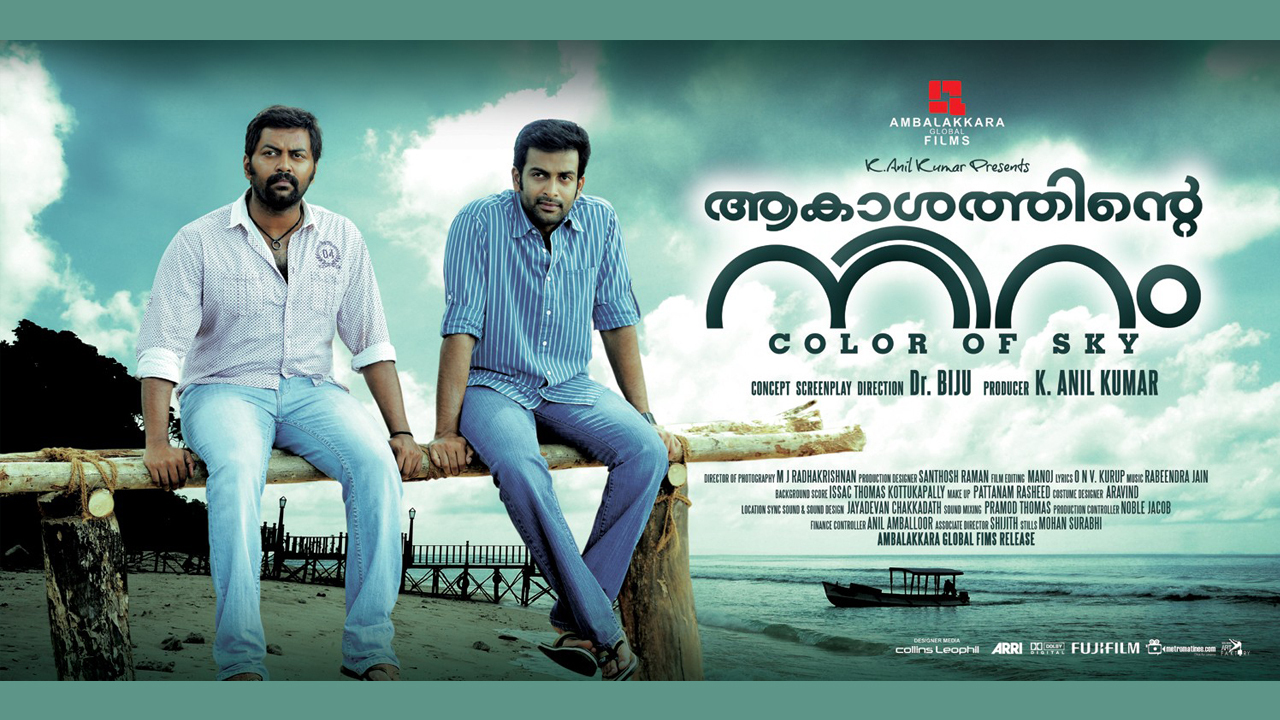
Color of Sky (Dr. Biju, 2012, India)

An old man comes to town to sell some art objects and pick up some flour or something. A thief sees him get the money at the art place and follows him back to his boat and eventually tries to rob him on the boat at knifepoint. The clever old man thwarts the robbery and ferries the thief to his isolated island where the thief is held prisoner, more or less, though he is treated like a hotel guest or something. Also at the hotel type place are a man, a woman, and a child, all of whom are mostly silent in the film. I liked the message of the movie, which is essentially that you need to find beauty in your life and that creating art and helping other people are both redemptive activities. I'd be surprised if this movie ever materialized anywhere, but I enjoyed it quite a bit, even if it was sort of meditative and intermittently perplexing.
B

26 October 2012

Valley of Saints (Musa Syeed, 2012, India)

Valley of Saints takes place primarily on and around Dal Lake in Kashmir.  At the start of the film, rebel actions lead to a city wide curfew which exempts the boat people who live on these little islands in the lake or in houses on stilts in the lake. Two boys have been planning to leave the city to try their fortunes in Delhi. Afzal is a typical macho type male, committed to various smuggling schemes and so forth, while Gulzar seems to possess a more sensitive and artistic temperament. Naturally Gulzar becomes out protagonist. The friends' attempt to leave the city is thwarted by the curfew and their relationship is strained as they booth swoon over this girl they are told to look after who is staying on Gulzar's uncle's (?) houseboat, which seems almost like a guesthouse built on stilts in the lake. The girl, Asifa, turns out to be a researcher studying the condition of the lake. It's great because there are the stories of these characters wrapped up both in the story of the political situation of Kashmir which looms in the background alongside the ecological crisis occuring witht his lake. I thought it was well done and compelling, overall.
B

25 October 2012

Westerland (Tim Staffel, 2012, Germany)

Based on what I just read on some German site, this film is apparently all about delivering the unexpected, or something. It takes places on Sylt, an island to the north of Germany which is associated with summer vacations. This film takes place here in the winter. It's also ostensibly a gay love story, but there is very little indication that this is actually a romantic relationship instead of a some kind of codependent friendship. They sleep in the same bed and spend a lot of time together but I don't recall them ever kissing or being otherwise physically romantic. I didn't know what to make of the film. The characters and their situations struck me as very authentic, but I don't know how interested I was in the story or how revelatory it felt. The characters are Cem and Jesus. The former is an industrious fellow who seems to let his own life affairs and possible future prospects drift into an abyss because of this strange codependent relationship. Jesus is unstable, possibly homeless, probably a pathological liar, constantly smoking pot, probably bipolar or something. These characters felt more or less real to me, maybe a little sanitized, and I enjoyed spending time with them, but I'm not sure the film had anything interesting to say about them. The crazy one is very pretty though.
B-

The Last Friday / Al Juma Al Akheira (Yahya Alabdallah, 2011, Jordan)

This was a dour, somewhat depressing movie. A cab driver, likable enough, but deep in hock following a failed attempt to make it big by going abroad, deals with cancer (or some testicular problem) of some sort and a juvenile delinquent son. He's also got all kinds of issues about his wife being married to a wealthy man, we discover. He also doesn't seem interested in telling anyone that he has this serious health condition. I don't know, most of the characters are likable enought but the film, like the city it takes place in, is stark and somehow painful to watch. This movie and I may have been doomed from the start because men annoy me so much, but for whatever reason, I had trouble really connecting to this one. The acting is good; Ali Suliman deserves the praise he's gotten for a good performance. The film is probably really real. People are probably too cold and unhelpful and self-defeating. It's probably just hard for me to watch sometimes, because it reminds me that I might not like people too much. It's funny though that people in this movie seemed so fond of dogs because we're all the time hearing that Arabs don't like dogs. It's funny how little we know about each other.
B-

Post tenebras lux (Carlos Reygadas, 2012, Mexico)

The film's title is Latin for "After darkness, light." That's about as much clarification as you're going to get here. The first few minutes set me up to think that this would be an amazing film. There is this demented high energy sequence where this little girl is standing in a rainy field calling the names of herd animals which seem to be stampeding about her. The sky is a poisonous garden. The actual title sequence is annoying as each of the three words is placed on the the screen individually for too long a time. Honestly, it kind of undercut the energy of the previous scene by seeming silly and self-important. This is followed by a scene of a cartoon devil walking into an apartment with a toolbox. Very unexpected. Then are all these random scenes of rugby, sex clubs, animal cruelty, an AA meeting, family bonding, and strange weather. I liked a lot of this movie. Some of the sequences are electrifying. I'm just not sure the film earned its high moments, and the sum of the parts seem more than the whole. By the way, several people left the screening early on when the ostensible protagonist seems to beat a dog to death. Still more trickled out during an inexplicable sequence in a sex club which went from perplexing to tedious to enchanting. The latter scene has a lot of nudity but nothing too graphic and the dog scene is disturbing but it's filmed in such a way that the dog is mostly offscreen while it's taking place.
Essentially, I kind of feel like the cinematographer Alexis Zabe is the real star here, as perhaps was also the case in Silent Light. The little girl in the movie is also exquisite; I was surprised to learn that she's the director's own daughter.
I guess I'm not giving the full picture here. I may have read too many other reviews. The movie seems to be about dreams, maybe life being a dream, maybe childhood being a dream, and a wistful longing for the experience of being a child. At least that seems to be part of it.
B

Flowerbuds / Poupata (Zdenek Jirasky, 2011, Czech Republic)

This was actually the final film I saw of the film festival, during the best of the fest screenings. It won the runner up prize in the first time director category. It seems like a subversive made for television Christmas movie. It's not quite as dour as I expected, given that the synapses I found focus on the serious problems faced by all the characters. The father is a compulsive gambler with a questionable work ethic, the daughter is pregnant with a child of which she may or not know who the father is, the son is in love with a prostitute, and the mother has to deal with it all. I actually ended up finding it sort of funny though. I mean, it's certainly dark, and don't look for anything remotely happy about the ending, but there is something sort of uplifting about the audacity of big finale. Despite their foibles, I found most of the characters relatively likable, particularly the Vietnamese couple who seem to be friendly with the wife.
B

24 October 2012

Germania (Maximiliano Schonfeld, 2012, Argentina)

As you may or may not know, a bunch of Germans who had relocated to Russia at the invitation of Catherine the Great eventually chose to move elsewhere when the situation in Russia changed for the worse. (See more info here.) This film introduces us to a family in one of these German Argentine villages. For whatever reason, the family's farm seems to have been afflicted by some kind of plague, which may be the result of water contamination, in which their chickens are all sick and so forth. The family has to leave their farm behind and move on to another community, where they will be forced to leave their heritage and even their language behind. It's what you'd call a meditative film.There's a weird storyline about the sister running around with some itinerant farm laborer and some weird sexual tension or something between her and her brother. The father seems to have died some time ago and the mother doesn't exactly seem with it.
I don't envy filmmakers who bring something like this to a regional film festival. It's all crochety old people who talked throughout the movie and then complain about what they didn't like about it. It's sort of in the same vein as Silent Light, I guess. It's interesting from a cultural perspective and fascinating from a linguistic perspective, assuming you have at least basic knowledge of German and Spanish...
B

22 October 2012

Paradise: Love / Paradies: Liebe (Ulrich Seidl, 2012, Austria)

This film is more or less the story of Teresa, a middle aged Austrian single mother who lives a pretty drab life. Her daughter, on the verge of juvenile delinquency, doesn't seem to care about her at all, and there doesn't really seem to be very much in her life that's particularly fulfilling. For her birthday she's going to Kenya with a friend of hers, who has been to Kenya before and knows the ropes down there, at least as far as the ins and outs of holiday love affairs with young African gigolos goes. I feel like Western audiences in general will focus a lot on how these African men seek to exploit or take advantage of the white women. That's the impression I could from the audience I saw it with, anyway. Speaking of that audience, they laughed like children any time anyone was naked or did anything remotely sexual. I felt like I was back in junior high. The movie certainly has moments which are funny, but I also felt like a lot of the racism was being driven by petit bourgeois ideas about race, gender, and body shape, which I confess to have found simple minded and, for lack of a better word, counterrevolutionary.
It's true that the local men are constantly on the make, whether they're trying to sell trinkets on the beach or demanding large sums of money from the European women they sleep with, but clearly the women think it's worth it, because they keep going back. It's kind of a complicated situation. You find yourself feeling overwhelmed as the tourists are mobbed by people selling things and asking for money, but then again you have an upscale resort protected by armed guards and surrounded by extreme poverty in a country with a long history of European colonialism.
The acting in the film is very good, but it's not always easy to watch. Another tale of mutual exploitation, perhaps, though it's hard to say it's mutual when there is such a power differential here.
B

Diaz: Don't Clean Up This Blood (Daniele Vicari, 2012, Italy/France/Romania)

This film tells the story of the brutality that emerged as a response to the protests that occurred during the 2001 G8 Summit n Genoa, Italy. It focuses on these media centers were all sorts of journalists, activists, and random people who couldn't find hotel rooms in the city congregate and sleep. After the film the actor suggested that the shocking response of the police force to these protestors was a political act by Berlusconi, who was having some trouble and needed to appear capable and strong. The actor also mentioned that the director said he actually left out a lot of the more harrowing things that occurred because he didn't think the audience would believe it all. So if you're wondering if it was really as bad as this, it was apparently worse. The film does a pretty good job of establishing likeable characters, which makes the brutality that ensues even harder to watch. There film is, to a small extent, in a not entirely chronological order. These flashes out of time serve to build tension throughout the film. I almost feel traumatized watching this movie. It's really disheartening to see what it looks like when people dare to talk back to money in any real way. About a week after I watched this movie, I saw the Danish film A Royal Affair, and I can't help feeling like the situation we have today isn't as far from serfdom as we'd like to believe.
B

21 October 2012

Out in the Dark (Michael Mayer, 2012, Israel/Palestine)

Yet again the sociopolitical situation in Israel is dramatized through a gay love story. An ambitious Palestinian university student from Ramallah falls in love with an Israeli lawyer from Tel Aviv. Complications ensue. This is an entertaining, if not terribly original film. I guess what makes it more successful than, say, The Bubble, is that it's more upfront about the seriousness of the political situation, probably because that other film is more of a comedy. You basically have the Palestinian family on one side, all terrorists and gangsters who have nother better to do, it seems, than persecute gay people and stockpile weapons. On the other hand, you have the cruel Israeli security service, who according to this film blackmail gay Palestinians seeking refuge in Israel and then betray them when they are no longer useful. The director claimed at the screening that the events in the film are based on real events that happened to various people they interviewed in the gay underworld of Tel Aviv. If that's the case, Israel seems far less progressive than it's given credit for being. My boyfriend's stories about visiting Israel have always left me with a desire to visit the place, even though he, like most young American Jewish people I know, isn't particularly fond of the place. After seeing this movie, I'm not sure I really would want to visit the place anymore. I wonder if it would make much of a difference in the middle east if their cities were more colorful. They're so stark looking.
It's entertaining and I'm glad enough that I watched it, but, I guess I wouldn't say it's extremely well made. I liked the actors.
B-